
The American efforts to make India a security partner have enhanced India's importance to Chinese decision makers and new recognition of India's importance and achievements are reflected in a much more positive reporting about India in the State-controlled media, says Walter Andersen.

'Modi's investment in the relationship with Washington is the biggest deliverable of this visit. He means business and that's fantastic!'
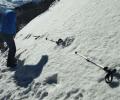
So what's all this talk about the Yeti? Does it really exist?

'I don't believe that this was a parting shot by any means. This was simply the President speaking to what makes us great democratic nations.'

Modi is likely to seek support of Switzerland and Mexico for India's membership of the 48-member Nuclear Suppliers Group as both these countries are key members of the elite group. The issue is likely to figure during Modi's meeting with Obama in Washington.

Amazon committed a fresh investment of $3 billion, in addition to the $2 billion it announced in 2014.

Days before Narendra Modi arrives in the US to speak at the UN, meet Barack Obama, gupshup with the likes of Nadella, Pichai, Zuckerberg, and address desis in Silicon Valley, his ministers will help set the commercial and strategic tone for the prime minister's visit.

Indian Admirals say Malabar 2018 will involve unprecedented complexity, featuring enemy threats in all three dimensions, but especially underwater threats from submarines -- a key Chinese strength. For the first time, officers from all three navies will be posted on other navies' warships. That means Indian Navy officers will obtain the unprecedented benefits of operating on US nuclear attack submarines and Japan's highly regarded Soryu submarines.

The issue is likely to crop up in Prime Minister Manmohan Singh's meeting with US President Barack Obama.

'If the US-Pakistan relationship continues to suffer, Pakistan may feel it has less to lose and decide that it need not keep a leash on LeT in order to appease America.' 'A tougher US policy toward Pakistan could lead to an emboldened and strengthened LeT and JeM, resulting in more terrorist attacks in India.'

Prime Minister Manmohan Singh and United States President Barack Obama will meet in Washington on Thursday to chart a course for "future cooperation" in areas such as civil nuclear technology, trade, investment, defence and counter-terrorism, amid perceptions that bilateral strategic ties have plateaued.

Addressing the media jointly with Modi after hour-long talks at the White House, Obama said it was natural for India and the US, two biggest democracies, to 'deepen and broaden' partnership.

'Did Trump hint at US military intervention in Qatar?' asks Ambassador M K Bhadrakumar.

Describing America as India's "natural global partner", Prime Minister Narendra Modi arrived in New York on Friday on a five-day visit to the US, holding out an assurance that India is "open and friendly" for business and innovations.

As a sitting head of government Narendra Modi enjoy immunity from suits in American courts and also enjoy personal inviolability.

United States President Barack Obama came away with "renewed confidence" from his 90-minute meeting with his successor Donald Trump, the White House has said, adding that the emphasis of the discussions was on ensuring smooth transition to the next administration.
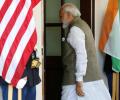
We see none of the euphoric build-up customary to India's encounter with US presidents in recent times. This gives Modi wriggle room to work on the much-needed reset of India-US ties.
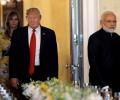
'China was the elephant in the Oval Office and Trump would have sensed that Modi's foreign policy architecture has become disoriented sans the US' pivot to Asia,' points out Ambassador M K Bhadrakumar.
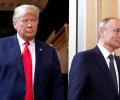
The stagnation in US-Russia relations does not augur well for New Delhi's strategic interests, says Harsh V Pant and Raj Kumar Sharma.

Pakistan's prime minister is trying to use the unrest in Kashmir to save his government, says Ambassador G Parthasarathy, a former high commissioner to Islamabad.

Here are some of the best photos from around the world in the month gone by...

Tillerson said China's behaviour and action is "posing a challenge to the rules-based international order".

Even on paper, there is not much to choose, especially with Pune beating MI thrice this season including a comprehensive victory in Qualifier 1. But a impressive show by Mumbai in the final cannot be ruled out.

Defence, security, science and technology, trade and culture are some of the issues on the plate for the talks.

Leaders of the two countries, however, did discuss on Pakistan's nuclear safety and security which is an ongoing discussion.

Is North Korea really dismantling its nuclear programme? Rajaram Panda explains the many challenges to denuclearise the Korean Peninsula.

'It is important that the prime minister and our officials here, we dedicate ourselves to that important goal, the concept of freedom of religion for all to worship their faith,' US Congressman Ed Royce tells Aziz Haniffa/Rediff.com
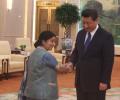
'This is a US-India effort and it is not necessarily to counterweight anyone.'

'Obama probably thinks, "He is quite a guy!" Americans on Capitol Hill think, "He has guts. He is a big player".' An Indian official explains the importance of the Modi visit to Sheela Bhatt/Rediff.com

Neither Barack Obama or John F Kerry were involved in the decision for Ambassador Nancy Powell to meet Narendra Modi. Rediff.com's Aziz Haniffa reports from Washington, DC.

'We have never before seen an Indian prime minister's visit to the United States so heavily business-oriented and so packed with meetings with the US business community.' Aziz Haniffa/Rediff.com reports from Washington, DC.

US President Barack Obama on Saturday embarked on his highly anticipated three-day landmark trip to India during which the two countries will strive to make progress on climate change, defence and economic cooperation.

The meeting between Prime Minister Manmohan Singh and United States President Barack Obama will be held as per schedule on September 27 at the White House, despite the latter being busy due to the ongoing Syrian crisis.

'In the past the US has been reluctant to name Pakistan directly in an US-India joint statement.'

'Of all the areas that define the future for a strong US-India partnership, none is more important than our defence and security ties.'

Vishnu Vardhan won his second Challenger level title of the season with Japanese partner Toshihide Matsui but four other Indians, including Leander Paes, tumbled out of various ATP events across the globe.

Trade between Australia and India stands at around $15 billion a year, or just a tenth of that between Australia and China.

Opportunity for India to take leadership in economic diplomacy.

But the Democrats appeared to be unconvinced by Trump's argument of national emergency.

The MoU was signed by New York Consul Geneal Dnyaneshwar Mulay on behalf of the ICCR and Richard L Edwards, executive vice president for Academic Affairs and interim Chancellor, Rutgers University to initiate this academic partnership.
